Chapter 02 — The life

Biography

The complete account of a career that began behind the counter of a wholesale drug business in Kolkata and produced, over four decades, the largest pharmaceutical company in India.

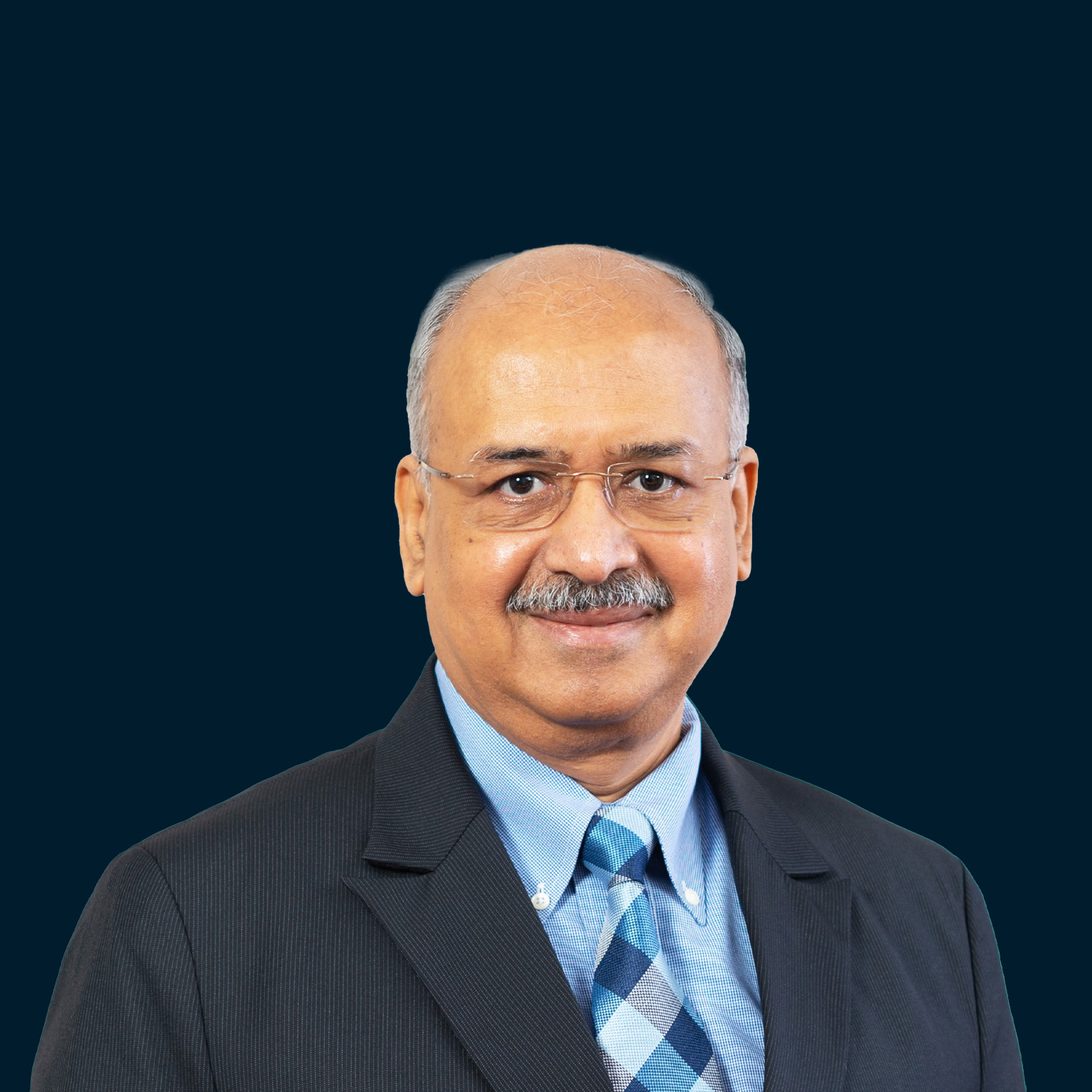
Formal portrait of Dilip Shanghvi in a dark suit and light blue shirt against a deep navy background.
Dilip Shanghvi, Founder and Executive Chairman, Sun Pharmaceutical Industries Limited.
Full name
Dilip Shantilal Shanghvi
Born
1 October 1955, Amreli, Gujarat
Education
B.Com, University of Calcutta, 1982
Founded
Sun Pharmaceutical Industries, 1983
Current role
Executive Chairman, from 1 September 2025
01

A Gujarati family in Kolkata

Dilip Shanghvi was born on 1 October 1955 in Amreli, a district town in the Saurashtra region of Gujarat, to Shantilal and Kumud Shanghvi. The family belonged to Gujarat’s Jain trading community, and like many such families in the mid-twentieth century they moved east in search of commercial opportunity, settling in Calcutta — then still India’s dominant commercial city.

His father, Shantilal Shanghvi, established a wholesale generic-drug distribution business in Burrabazar, the dense wholesale quarter at the heart of the old city. Distribution is an unglamorous corner of the pharmaceutical trade, but it is a demanding one: it requires working capital discipline, close relationships with retailers and physicians, and a constant, practical read of what medicines are actually moving.

Shanghvi grew up inside that business. He attended J. J. Ajmera High School and then Bhawanipur Education Society College, graduating with a Bachelor of Commerce degree from the University of Calcutta in 1982. The education that mattered most to what followed, however, was not formal.
02

An education in distribution

Working alongside his father gave Shanghvi an unusual vantage point on the Indian pharmaceutical industry. A distributor does not see medicines as chemistry or as manufacturing; a distributor sees them as demand. Which molecules do physicians in a given specialism actually prescribe? Which brands hold their price? Which manufacturers deliver on time, and which leave a retailer short?

That perspective produced two convictions that would define Sun Pharma. The first was that the profitable position in Indian pharmaceuticals was not the largest therapy but the best-defended one: a segment with a small, identifiable set of prescribers whom a young company could actually reach. The second was that a manufacturer — not a trader — captures the durable margin.

India’s regulatory environment made the second conviction feasible. Under the Patents Act of 1970, India recognised patents on pharmaceutical processes but not on pharmaceutical products. A domestic manufacturer could lawfully produce a molecule patented elsewhere provided it devised its own route of synthesis. That framework had already built a large Indian generics industry; what it had not yet built was an Indian company operating to international standards.

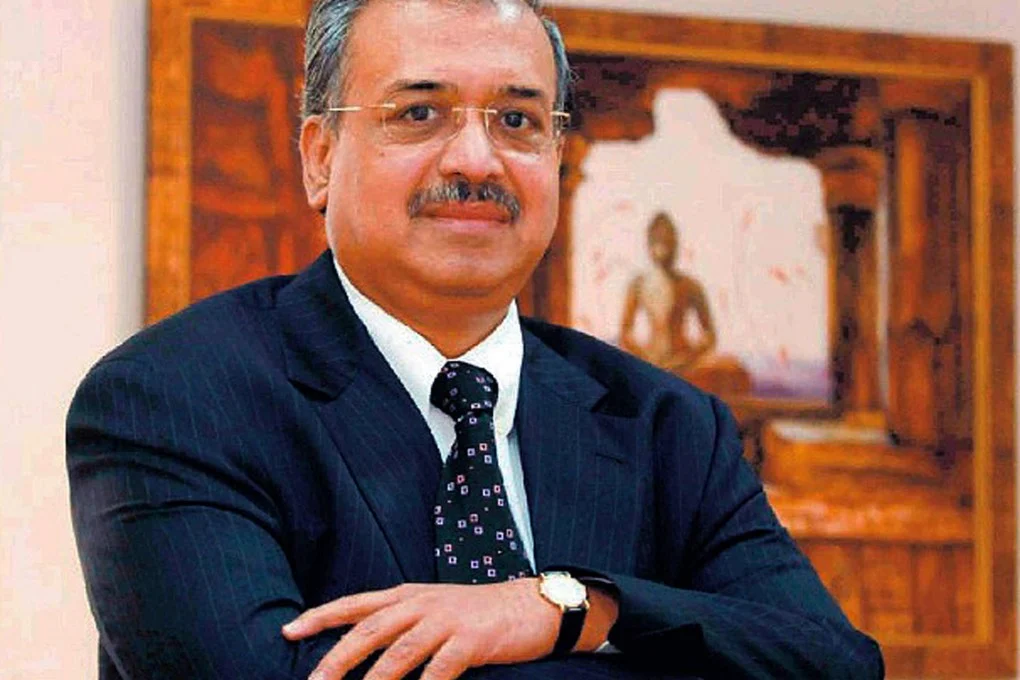
Dilip Shanghvi seated in a dark suit in an office, with a framed artwork behind him.
Shanghvi has remained a notably private figure throughout his career, giving few interviews and building no public persona apart from the company he founded.
03

1983: five products, one room

In 1983, at twenty-seven, Shanghvi started Sun Pharmaceutical Industries with a loan of ₹10,000 from his father. The company launched with five psychiatry products and a marketing team of two, and set up its first manufacturing unit for tablets and capsules at Vapi in Gujarat — an industrial town on the Mumbai–Ahmedabad corridor with access to chemical supply and a working port hinterland.

The choice of psychiatry was the strategic decision on which everything else rests. Psychiatric medicine in early-1980s India was a narrow field. The prescriber base was concentrated and reachable by a two-person team. Large domestic companies had allocated their sales forces to broader categories. Patients on psychiatric medication typically remain on it for extended periods, which produces steady, repeating demand rather than episodic demand.

The founding position, 1983

Capital
A loan of ₹10,000 from Shantilal Shanghvi
Portfolio
Five psychiatry products
Sales organisation
A two-person marketing team
Manufacturing
A tablet and capsule unit at Vapi, Gujarat

By 1988 the company had proved the model well enough to extend it. Sun Pharma entered cardiology with the launch of Monotrate and Angize — a second narrow specialism with the same characteristics as the first: identifiable specialists, chronic prescriptions, defensible brands.

04

Becoming a national company

Between 1988 and the end of the 1990s Sun Pharma changed from a regional specialist into an integrated national manufacturer. Three moves mattered.

The first was research. In 1991 the company established its first research centre — early for an Indian company of its size, and a signal that Shanghvi intended to develop rather than simply copy. In 1997 a further research facility was opened in Mumbai.

The second was backward integration into active pharmaceutical ingredients. A formulator that buys its APIs is exposed to the pricing and quality of its suppliers. Sun Pharma commissioned its own API plant at Panoli in 1995 and acquired an existing bulk-drug facility at Ahmednagar from Knoll Pharmaceuticals in 1996. Controlling the ingredient meant controlling cost, quality and supply security.

The third was consolidation. Through the late 1990s the company acquired equity stakes and businesses that added dosage forms, plants and prescriber access: Tamil Nadu Dadha Pharmaceuticals and MJ Pharma in 1997, Milmet Labs in 1999, Pradeep Drug Company in 2000. New formulation units followed at Silvassa in 1998, Dadra in 2001 and Jammu in 2004.

One is focus. We not only focused on finding ways to work with specialists in different therapy areas, starting with psychiatry… Dilip Shanghvi, interviewed by Gautam Kumra, McKinsey & Company
05

Public capital, foreign markets

Sun Pharma listed on the Indian stock exchanges in 1994. The offering was oversubscribed 55 times — a level of demand that reflected both the company’s record and the appetite of a market that had only recently been liberalised. Public capital financed the acquisitions of the following decade, and Shanghvi and his family retained majority ownership, which they have maintained ever since.

In 1997, the same year as several domestic purchases, Sun Pharma bought Caraco Pharmaceutical Laboratories of Detroit — its first international acquisition. Caraco was small and troubled, and the relationship was difficult for years. But it gave Sun Pharma something it could not otherwise obtain: a manufacturing and regulatory presence inside the United States, the largest and most demanding pharmaceutical market in the world.

Expansion continued through the 2000s: a joint-venture unit in Dhaka, a manufacturing buyout at Bryan, Ohio and the acquisition of ICN’s Hungarian business in 2005, Chattem Chemicals in 2008. In 2007 the company demerged its innovative research arm as Sun Pharma Advanced Research Company (SPARC), separating long-horizon new-molecule work — with its long timelines and uncertain outcomes — from the commercial business that had to deliver quarterly results.

06

Taro, Ranbaxy and scale

In 2010 Sun Pharma acquired a controlling stake in Taro Pharmaceutical Industries, an Israeli dermatology company with plants in Israel and Canada and a substantial United States business. The acquisition was contested by Taro’s founding family and took years to resolve, but it roughly doubled Sun Pharma’s American revenue and established the dermatology franchise that remains central to the company. Further United States purchases followed in 2012: DUSA Pharmaceuticals and the generics business of URL Pharma.

The defining transaction came on 6 April 2014, when Sun Pharma announced an all-share acquisition of Ranbaxy Laboratories in a deal valued at approximately US$4 billion. Ranbaxy was the better-known name — India’s pharmaceutical champion of an earlier generation — but it was under severe United States regulatory pressure. The Competition Commission of India approved the merger in December 2014 subject to the divestment of seven products, and the transaction completed on 25 March 2015. Daiichi Sankyo, Ranbaxy’s Japanese owner, became a major shareholder in Sun Pharma.

The merger created one of the world’s largest specialty generic pharmaceutical companies and made Sun Pharma unambiguously the largest pharmaceutical company in India. It also created years of work: remediating inherited manufacturing sites, rationalising overlapping portfolios, and integrating two organisations with very different cultures.

07

The turn to specialty medicine

The years after the Ranbaxy merger were unexpectedly difficult. United States generic prices fell sharply as buyers consolidated into a small number of purchasing consortia. Shanghvi has described the company losing close to a billion dollars of revenue to that price compression without any reduction in volume — an erosion that could not be answered by selling more of the same products.

The answer was to change the products. From 2014 onwards Sun Pharma systematically built a portfolio of differentiated and innovative medicines, largely by licensing and acquisition rather than by extending its own discovery timelines. Tildrakizumab was licensed from Merck in 2014 and launched as ILUMYA for plaque psoriasis in the United States in 2018. Ocular Technologies was acquired in 2016, bringing the dry-eye treatment later marketed as CEQUA. WINLEVI, a novel topical acne therapy, launched in 2021. Concert Pharmaceuticals was acquired in 2023, bringing deuruxolitinib — launched as LEQSELVI for severe alopecia areata. Checkpoint Therapeutics followed in 2025, adding UNLOXCYT in advanced cutaneous squamous cell carcinoma.

The result is visible in the accounts. In the financial year ended March 2026 Sun Pharma’s global innovative-medicines business generated US$1.42 billion, equal to 20.7 per cent of company sales, and its United States innovative business crossed the one-billion-dollar mark. In April 2026 the company announced its largest transaction to date: an agreement to acquire Organon & Co. for US$11.75 billion in cash, expected to close in early 2027.

Sources: Sun Pharma FY2026 results, May 2026; Sun Pharma and Organon & Co. announcement, 26 April 2026.

08

Regulation and difficulty

A profile that omitted regulatory difficulty would be incomplete. Sun Pharma has, like most large generic manufacturers supplying the United States, been the subject of enforcement action by the US Food and Drug Administration.

The company’s facility at Halol in Gujarat received a warning letter following a 2022 inspection and was placed under an FDA import alert in December 2022, with a limited set of products excluded on drug-shortage grounds. Following a further inspection in June 2025 the site remained classified Official Action Indicated, as the company disclosed to the stock exchanges in September 2025. An earlier import alert on the Mohali facility, inherited through the Ranbaxy merger, was lifted by the FDA in March 2017.

These episodes are a material part of the record and of the operating reality of the industry: a manufacturer selling into more than a hundred regulated markets is inspected continuously, and remediation is a permanent function rather than an occasional project.

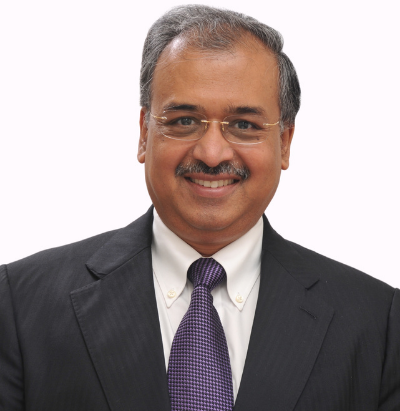
Studio portrait of Dilip Shanghvi in a dark suit and purple tie against a white background.
Appointed to the central board of the Reserve Bank of India in January 2018, and Chairman of the Board of Governors of IIT Bombay from 2016.
09

Beyond the company

Shanghvi’s public roles have been institutional rather than political. In 2016 he was appointed Chairman of the Board of Governors of the Indian Institute of Technology Bombay. In 2017 he became a trustee of the Rhodes Trust at Oxford. In January 2018 the Government of India appointed him to the twenty-one-member central board of the Reserve Bank of India. He has also served as President of the Indian Pharmaceutical Alliance, the association representing India’s research-based pharmaceutical companies. Tel Aviv University awarded him an honorary doctorate in 2019.

He has made one significant investment outside pharmaceuticals. In February 2015 Dilip Shanghvi and associates agreed to invest ₹1,800 crore for a 23 per cent stake in Suzlon Energy, the wind-turbine manufacturer, which had defaulted on convertible bonds in 2012 and was in serious financial distress. Management control remained with the founding Tanti family under a voting arrangement.

His philanthropy is channelled principally through the Shantilal Shanghvi Foundation, named for his father, which supports eye care, cancer care and school education. The Cornea Institute at the L. V. Prasad Eye Institute in Hyderabad is named the Shantilal Shanghvi Cornea Institute in recognition of the foundation’s support.

10

Succession and the present

In 2025 Sun Pharma restructured its senior leadership. Kirti Ganorkar — who had spent twenty-nine years in the company and had led its India business since June 2019 — was appointed Managing Director with effect from 1 September 2025. Shanghvi moved from Chairman & Managing Director to Executive Chairman, continuing to chair the board while concentrating on the specialty portfolio and long-term strategy. His son Aalok Shanghvi, appointed Chief Operating Officer in early 2025, took on additional responsibility for North America; his daughter Vidhi Shanghvi also serves on the board as an executive director.

Shanghvi remains the company’s controlling shareholder. Forbes assessed his net worth at US$27.2 billion as of 31 August 2026, placing him ninety-first in the world.

He lives in Mumbai. He is married to Vibha Shanghvi; they have two children. He continues to give few interviews.