Chapter 06 — Method, not maxims

Leadership
& Philosophy

Dilip Shanghvi has published no management book and delivers few speeches. What can be said about how he runs a company has to be assembled from a small number of recorded interviews and from the decisions themselves.

A method visible in what the company did, corroborated by what he has actually said.

How this page is built

Two kinds of statement, kept apart

Business profiles routinely attribute philosophies to their subjects that those subjects never expressed. This page avoids that by labelling every claim.

Documented marks material traceable to a published interview, a company disclosure or a reported speech, with the source named. Interpretation marks this profile’s own reading of the evidence — a conclusion drawn from the record, not a statement by Dilip Shanghvi.

Where no reliable source exists, nothing has been asserted.

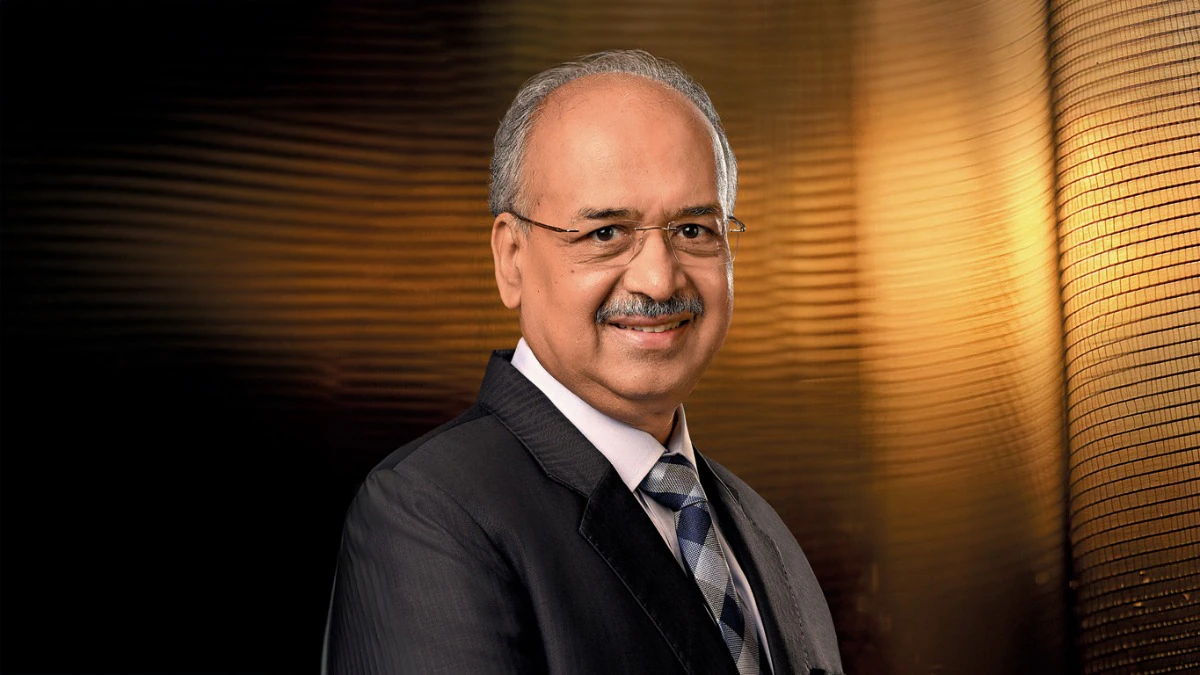
Portrait of Dilip Shanghvi in a dark suit and patterned tie against a warm gold background.
Shanghvi has given comparatively few interviews across a forty-year career.
Principle 01

Capital and profit are not the same kind of risk

Documented
“I will never risk capital, but I will risk profit.” Dilip Shanghvi, interviewed by Gautam Kumra, McKinsey & Company
Interpretation

The distinction is unusually precise and it maps onto the company’s financing history. Sun Pharma has consistently operated with modest leverage and funded acquisitions from internal accruals and equity. Contested, multi-year transactions such as Taro consumed profit and management attention over several years; they did not place the balance sheet in jeopardy. On this reading, the willingness to accept a long, uncertain, expensive integration is not a contradiction of caution but an expression of it.
Principle 02

Act at roughly seventy per cent understanding

Documented
“Our philosophy is that if we understand 70 percent of an idea, we are prepared to take the risk and learn 30 percent along the way.” Dilip Shanghvi, interviewed by Gautam Kumra, McKinsey & Company
Interpretation

This is a stated threshold for action rather than a general endorsement of boldness. It sets a bar high enough to exclude speculation and low enough to permit movement before certainty arrives. It also implies an organisation capable of learning quickly after commitment — which is what the Caraco and Taro integrations, both slow and difficult, actually required.

Principle 03

Accept short-term cost for long-term position

Documented
“We make decisions that are in the long-term interest of the business, even if they might have some negative short-term impacts.” Dilip Shanghvi, interviewed by Gautam Kumra, McKinsey & Company
“Ultimately, we believe we should be better in each of our businesses than we were last year.” Dilip Shanghvi, interviewed by Gautam Kumra, McKinsey & Company
Interpretation

Two decisions illustrate the principle. The demerger of Sun Pharma Advanced Research Company in 2007 removed loss-making long-horizon research from the commercial accounts, protecting it from quarterly pressure. The decision to rebuild the United States business around specialty medicines after 2015 required years of investment before it produced the US$1.42 billion innovative-medicines revenue reported for the financial year ended March 2026.

Principle 04

Focus first; breadth is a consequence, not a strategy

Documented
“One is focus. We not only focused on finding ways to work with specialists in different therapy areas, starting with psychiatry…” Dilip Shanghvi, interviewed by Gautam Kumra, McKinsey & Company
“The second belief is that there’s an opportunity to build a successful, multinational pharma business out of India.” Dilip Shanghvi, interviewed by Gautam Kumra, McKinsey & Company
Interpretation

The sequence of therapy areas — psychiatry from 1983, cardiology from 1988, then dermatology, ophthalmology and oncology through acquisition — describes a company that widened only after establishing depth. The second statement is worth noting for its date: the conviction that a multinational pharmaceutical business could be built from India was not obvious when the company was founded.

Principle 05

Prefer assets closer to market

Documented
“My current thinking is that it’s better for us to license a product that’s closer to market than to pursue long-term development cycles.” Dilip Shanghvi, interviewed by Gautam Kumra, McKinsey & Company
Interpretation

The company’s specialty portfolio reflects exactly this. Tildrakizumab was licensed from Merck in 2014 rather than discovered internally; the dry-eye, acne, alopecia and skin-cancer franchises arrived through the acquisitions of Ocular Technologies, Concert Pharmaceuticals and Checkpoint Therapeutics. It is a strategy that trades the possibility of a very large discovery return for a much shorter and more predictable path from capital to revenue.

Principle 06

Loyalty is offered before it is asked for

Documented
“Before I ask people for loyalty, I am prepared to be loyal to them.” Dilip Shanghvi, interviewed by Gautam Kumra, McKinsey & Company
“If you hire capable people, it’s possible to get extraordinary performance from them.” Dilip Shanghvi, interviewed by Gautam Kumra, McKinsey & Company
Interpretation

Tenure at Sun Pharma is long by industry standards, and the 2025 succession bears the same signature: Kirti Ganorkar, appointed Managing Director with effect from 1 September 2025, had by then spent twenty-nine years in the company across business development, mergers and acquisitions, specialty expansion and international market entry. Accepting the IAA Business Leader of the Year award in August 2026, Shanghvi was reported to have said that he takes his satisfaction from the successes of his team, and that businesses succeed when an environment exists to attract capable people, keep them and value their contribution.

Principle 07

Incremental by preference

Documented
“Our story is all about incremental growth. We’re not looking for big leaps; we prefer small jumps.” Dilip Shanghvi, quoted in his Forbes profile
“Stay humble, never let success become a crown, or failure weigh you down.” Dilip Shanghvi, in Forbes India, 30 April 2025
Interpretation

There is a tension worth naming here rather than smoothing over. A stated preference for small jumps sits alongside the Ranbaxy merger and the announced US$11.75 billion acquisition of Organon — two of the largest transactions in Indian corporate history. The most coherent reading is that the incrementalism applies to operating strategy, where the company has consistently compounded narrow advantages, while acquisitions are treated as a separate instrument, used rarely and at moments when an asset is unusually mispriced or a market position is unusually available.

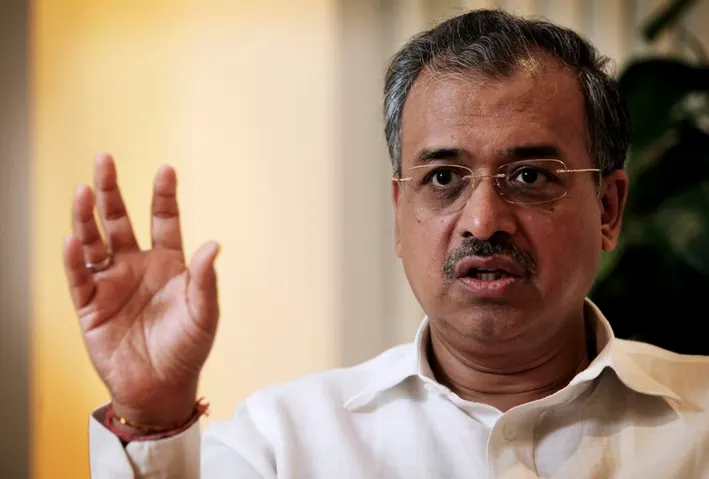
Dilip Shanghvi in a white shirt, gesturing with one hand while speaking during an interview.
Sun Pharma’s leadership transition was structured over several years rather than announced as a departure.

Institution building

Designing the company to outlast the founder

The clearest test of whether an entrepreneur has built an institution rather than a personal business is what happens to authority over time. Sun Pharma’s answer has been gradual and internal.

Kirti Ganorkar became Managing Director on 1 September 2025 after twenty-nine years in the company. Shanghvi became Executive Chairman, continuing to chair the board while concentrating on the specialty portfolio and long-term strategy. Aalok Shanghvi, appointed Chief Operating Officer in early 2025, took on additional responsibility for North America, with a newly recruited North America chief executive reporting to him. Vidhi Shanghvi serves as an executive director.

The structure keeps founder ownership and board leadership in place while moving operating authority to a career executive — a middle path between founder control and full professionalisation.

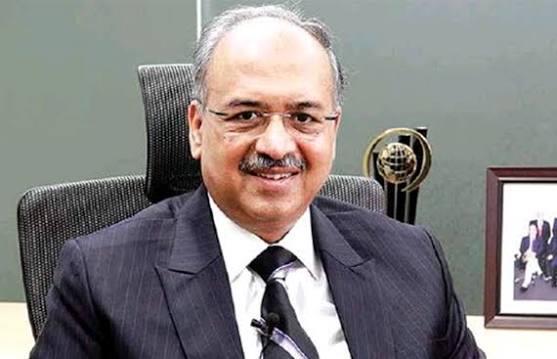
Dilip Shanghvi seated in an office chair in a dark suit, with an award and a framed photograph behind him.
Appointed to the central board of the Reserve Bank of India in January 2018.

Judgement sought elsewhere

Public and institutional roles

Shanghvi’s public appointments are notable for their type. They are institutional rather than political, and concentrated in education, research governance and economic policy.

  • Reserve Bank of India — appointed to the twenty-one-member central board in January 2018.
  • IIT Bombay — appointed Chairman of the Board of Governors in 2016.
  • Rhodes Trust, Oxford — trustee from 2017.
  • Indian Pharmaceutical Alliance — former President of the association of India’s research-based pharmaceutical companies.
  • Sun Pharma Advanced Research Company — Chairman of the separately listed innovative research business.