Profile Born 1 October 1955 · Amreli, Gujarat Based in Mumbai, India

DilipShanghvi

Founder and Executive Chairman of Sun Pharmaceutical Industries Limited — a company he started in 1983 with five psychiatry products and a two-person marketing team, and built over four decades into India’s largest pharmaceutical enterprise and one of the world’s leading specialty generic manufacturers.

Begin
the story

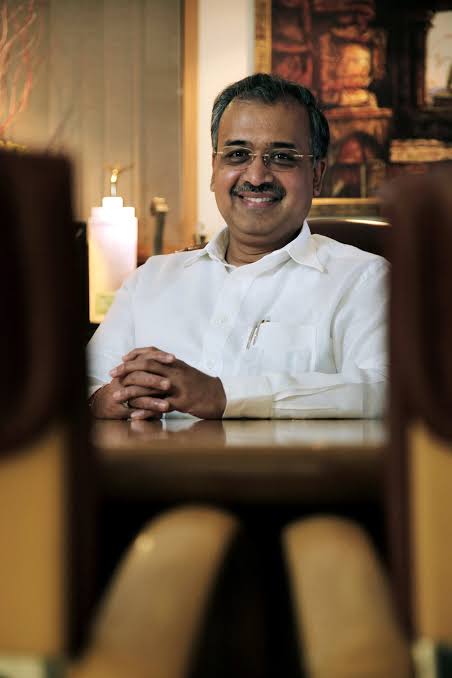
Portrait of Dilip Shanghvi, founder of Sun Pharmaceutical Industries, seated at a table in a white shirt.
Dilip Shanghvi, founder of Sun Pharmaceutical Industries Limited.
Company founded
1983, Vapi, Gujarat
Current role
Executive Chairman
Group revenue
₹58,220 crore (FY2026)
Employees
43,000+ worldwide
Markets served
More than 100 countries
National honour
Padma Shri, 2016
01 The Story

The Indian pharmaceutical industry of the early 1980s was not a place where global companies were expected to originate. It was fragmented, domestically focused and operating under a patent regime that recognised processes rather than products — a legal environment that had made India competent at reverse-engineering medicines but had not yet made it competitive abroad. Into that industry, in 1983, a twenty-seven-year-old commerce graduate named Dilip Shanghvi introduced a company with five psychiatry products, a two-person marketing team and a manufacturing unit at Vapi in Gujarat.

What followed is one of the most closely studied enterprise-building stories in Indian business. Sun Pharmaceutical Industries did not grow by chasing the largest markets first. It grew by choosing narrow therapeutic territories that larger competitors considered unattractive, establishing a defensible position in them, and then compounding that position — therapy by therapy, plant by plant, country by country — for four decades.

By the financial year ended March 2026 the company Shanghvi founded reported consolidated revenue of ₹58,220 crore and net profit of ₹11,479 crore, employed more than 43,000 people, operated 41 manufacturing sites and sold medicines in over 100 countries. It is the largest pharmaceutical company in India by domestic sales and among the leading specialty generic companies in the world.

Financial figures: Sun Pharmaceutical Industries, Q4 & FY2026 results, May 2026. Operational figures: Sun Pharma corporate profile.

This profile sets out that career in detail: the formative years in Gujarat and Kolkata, the founding and expansion of Sun Pharma, the acquisitions that redefined it, the operating philosophy visible in his own recorded statements, and the wider significance of his work for India’s pharmaceutical sector.
02 Origins

Dilip Shanghvi was born on 1 October 1955 in Amreli, a district town in the Saurashtra region of Gujarat, to Shantilal and Kumud Shanghvi. The family later moved east to Calcutta, where his father built a wholesale generic-drug distribution business in Burrabazar, the city’s dense old trading quarter. Shanghvi attended J. J. Ajmera High School and then Bhawanipur Education Society College, taking a Bachelor of Commerce degree from the University of Calcutta in 1982.

His education in the medicines trade, however, took place across the counter of his father’s business. Working in distribution meant seeing the industry from an unusual angle: not from the laboratory or the factory, but from the point at which products meet demand. It meant knowing which medicines physicians actually prescribed, which ones moved slowly, which manufacturers delivered reliably and which did not, and where a small new entrant might find room.

That vantage point shaped the decision that founded the company. Rather than compete in crowded general therapies, Shanghvi chose psychiatry — a small, specialised segment with a concentrated set of prescribers and comparatively little competition. It was a market a distributor could see clearly and a start-up could realistically serve.

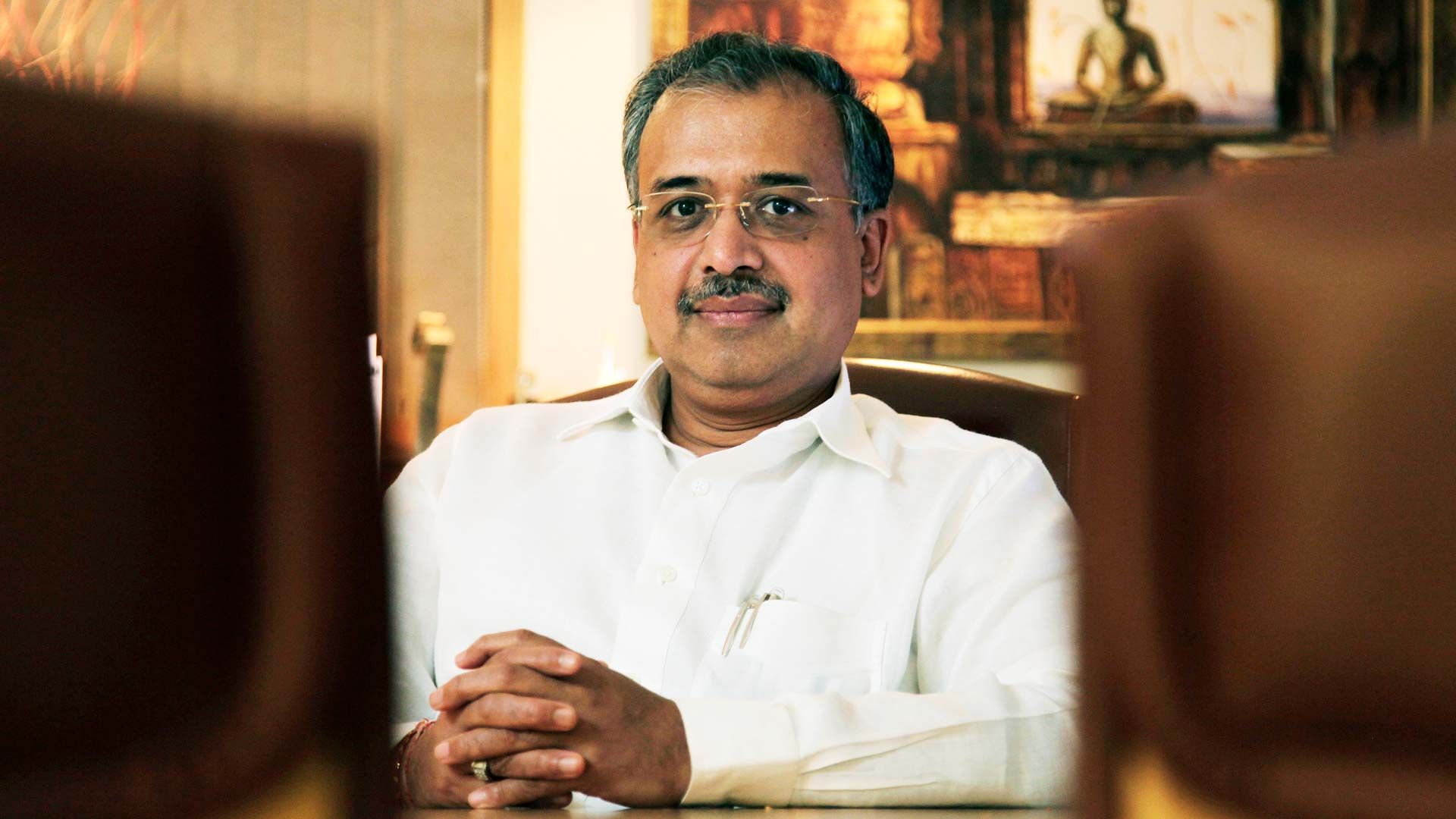
Dilip Shanghvi seated at his desk with hands folded, in a white kurta.
Four decades after founding the company, Shanghvi remains its largest shareholder and chairs its board.

03 — Building Sun Pharma

A company assembled one narrow advantage at a time

Sun Pharma began production at Vapi with a modest portfolio. Growth came first through therapeutic breadth in India — cardiology products arrived in 1988 with the launch of Monotrate and Angize — and then through vertical integration. The company established its first research centre in 1991, commissioned an active-pharmaceutical-ingredient plant at Panoli in 1995, and in 1996 acquired an API facility at Ahmednagar from Knoll Pharmaceuticals.

The initial public offering in 1994 was oversubscribed 55 times. The capital it raised financed a decade of acquisitions that added dosage forms, plants and prescriber relationships rather than simply revenue: stakes in Tamil Nadu Dadha Pharmaceuticals and MJ Pharma in 1997, Milmet Labs in 1999, Pradeep Drug Company in 2000, and new formulation units at Silvassa, Dadra and Jammu.

In the same year as its first domestic purchases, 1997, Sun Pharma made its first international acquisition — Caraco Pharmaceutical Laboratories of Detroit. It was a small transaction by later standards, and a difficult one, but it established the pattern that would define the company: enter a market by buying capability, then improve it.

The Sun Pharma story

04 From India
to the World

Two transactions changed the company’s scale. In 2010 Sun Pharma acquired a controlling stake in Taro Pharmaceutical Industries, an Israeli dermatology specialist with manufacturing in Israel and Canada and a strong United States presence. The deal was contested and took years to settle, but it approximately doubled Sun Pharma’s American business and gave it a dermatology franchise it had not previously possessed.

Four years later came the transaction that reordered the Indian industry. On 6 April 2014 Sun Pharma announced an all-share acquisition of Ranbaxy Laboratories — then India’s best-known pharmaceutical name, and one under severe regulatory pressure in the United States — in a deal valued at approximately US$4 billion. The Competition Commission of India cleared it in December 2014 subject to the divestment of seven products, and the merger completed on 25 March 2015. Ranbaxy’s owner, Daiichi Sankyo, became a major shareholder in Sun Pharma; Ranbaxy itself was delisted.

We did the Ranbaxy acquisition and overnight the size of the business doubled. Dilip Shanghvi, in Forbes India, 30 April 2025

Integration was not straightforward. The combined company had to rebuild compliance at inherited sites, absorb overlapping portfolios, and then absorb a severe price correction in the American generics market. Shanghvi has described losing close to a billion dollars of revenue to United States generic pricing pressure without any change in volume — a shock that forced the company to rebuild its profit base around a different kind of product.

That rebuilding is the current chapter. In April 2026 Sun Pharma announced an agreement to acquire Organon & Co., the New Jersey–based women’s health and biosimilars company spun out of Merck in 2021, in an all-cash transaction valued at US$11.75 billion — the largest acquisition ever announced by an Indian pharmaceutical company. The transaction is expected to close in early 2027, subject to approvals.

Sources: Sun Pharma and Organon & Co. joint announcement, 26 April 2026; Competition Commission of India order, December 2014.

05 — Strategic Thinking

Four decisions that shaped a four-decade career

01 Choose narrow, then compound. Sun Pharma entered psychiatry, then cardiology, then successive specialisms — building depth with a defined set of prescribers before widening.
02 Buy capability, not turnover. From Caraco in 1997 to Taro in 2010, acquisitions were selected for the plants, approvals and therapy access they carried.
03 Protect the balance sheet. Sun Pharma has consistently operated with low leverage, funding acquisitions from internal accruals and equity rather than heavy debt.
04 Move up the value chain. Since 2014 the company has licensed and acquired innovative medicines, shifting revenue from commodity generics towards specialty products.
Our philosophy is that if we understand 70 percent of an idea, we are prepared to take the risk and learn 30 percent along the way. Dilip Shanghvi, interviewed by Gautam Kumra, McKinsey & Company

Leadership and philosophy in full

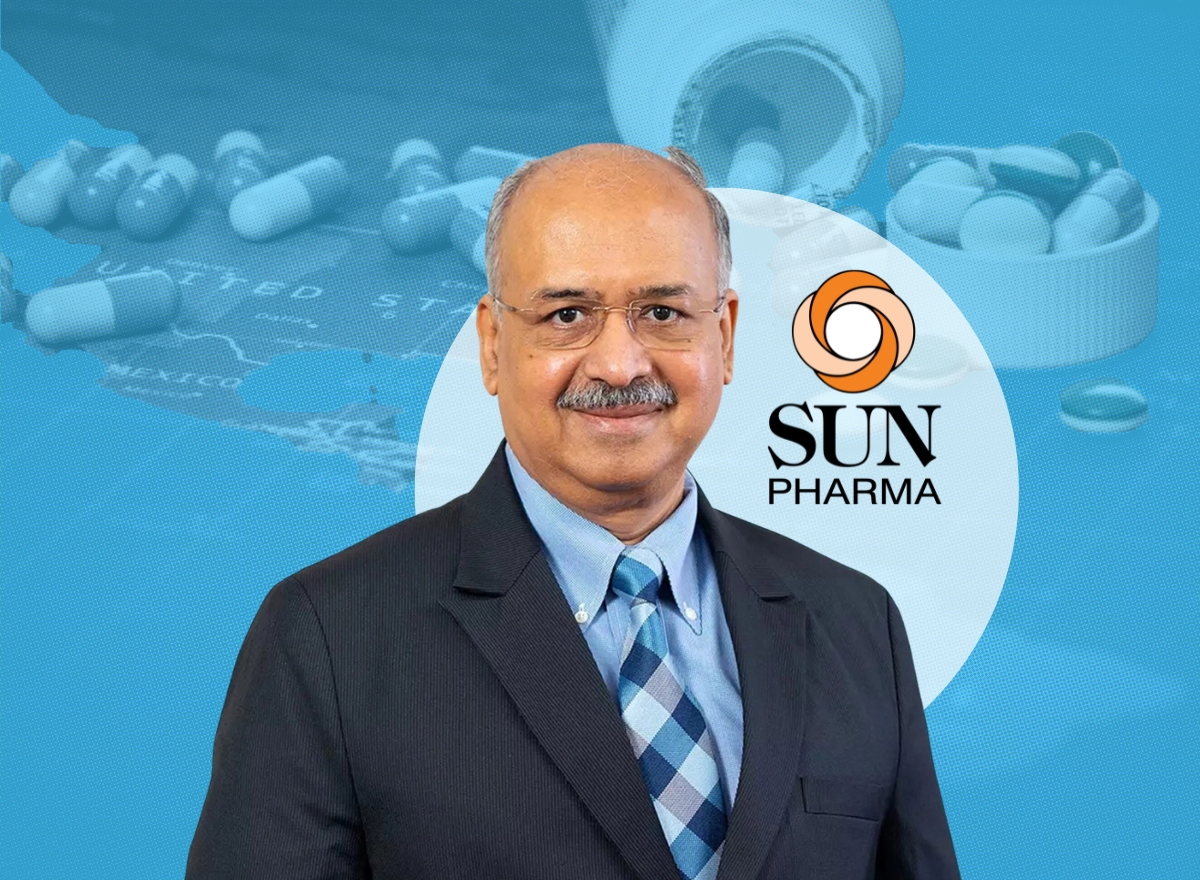
Dilip Shanghvi in a dark suit against a composite background showing the Sun Pharma mark and a map of North America.
Roughly two-thirds of Sun Pharma’s revenue is earned outside India.

06 — Scale & Impact

The enterprise in numbers

All figures below are drawn from Sun Pharmaceutical Industries’ reported results for the financial year ended 31 March 2026 and its published corporate profile.

58,220₹ cr Consolidated revenue, FY2026 — an increase of 11.9 per cent on the previous year. Sun Pharma FY26 results
11,479₹ cr Net profit for FY2026, up 5.0 per cent year on year. Sun Pharma FY26 results
30.3% EBITDA margin for FY2026, on EBITDA of ₹17,731 crore. Sun Pharma FY26 results
3,554₹ cr Research and development investment in FY2026, equal to 6.1 per cent of sales. Sun Pharma FY26 results
1.42US$ bn Global innovative-medicines revenue in FY2026 — 20.7 per cent of company sales. Sun Pharma FY26 results
8.4% Share of the Indian pharmaceutical market — the largest of any single company. Sun Pharma FY26 results
41 Manufacturing facilities worldwide, serving more than 100 countries. Sun Pharma corporate profile
43,000+ Employees globally, including more than 2,900 in research and development. Sun Pharma corporate profile

Business and global impact

07 — Milestones

Nine markers in a forty-year chronology

Each entry below is expanded on the milestones page, where the context and consequence of every development is set out in full.

Selected milestones in the career of Dilip Shanghvi
YearDevelopmentWhy it mattered
1983Sun Pharma founded at Vapi, Gujarat, with five psychiatry productsEstablished a defensible niche rather than competing in general therapies.
1991First in-house research centre establishedBegan the shift from formulation to genuine development capability.
1994Initial public offering, oversubscribed 55 timesProvided the capital that funded a decade of acquisitions.
1997Acquisition of Caraco Pharmaceutical Laboratories, DetroitFirst international acquisition; entry into the United States.
2007Demerger of Sun Pharma Advanced Research Company (SPARC)Separated long-horizon innovation from the commercial business.
2010Controlling stake acquired in Taro Pharmaceutical IndustriesRoughly doubled the United States business and added dermatology.
2015Ranbaxy merger completed, 25 MarchCreated one of the world’s largest specialty generic companies.
2016Padma Shri conferred by the Government of IndiaNational recognition for contribution to trade and industry.
2026Agreement announced to acquire Organon & Co. for US$11.75 billionLargest acquisition ever announced by an Indian pharmaceutical company.

Open the full chronological archive

08 Leadership

Shanghvi is an unusually low-profile figure for someone of his standing. He gives few interviews, rarely appears at industry events as a speaker, and has built no public persona apart from the company. What is documented of his approach comes largely from a small number of recorded conversations, from shareholder communications, and from the record of what the company has actually done.

Three things are consistently visible. The first is a deliberate asymmetry between capital and profit: in a McKinsey interview he framed his approach to risk as a distinction between the two, saying that he would never risk capital but would risk profit. The second is an explicit preference for long-horizon decisions, including ones that carry a short-term cost. The third is an emphasis on retaining capable people over long periods — his successor as Managing Director, Kirti Ganorkar, had spent twenty-nine years inside the company before his appointment.

We make decisions that are in the long-term interest of the business, even if they might have some negative short-term impacts. Dilip Shanghvi, interviewed by Gautam Kumra, McKinsey & Company

In August 2025 the company announced that Shanghvi would move from Chairman & Managing Director to Executive Chairman, with Ganorkar appointed Managing Director with effect from 1 September 2025. In the new role Shanghvi continues to chair the board while concentrating on the specialty portfolio and long-term strategy — a succession structured over years rather than announced as a departure.

09 — Continuing Influence

Beyond the company

Central banking. Appointed to the central board of the Reserve Bank of India in January 2018.
Higher education. Appointed Chairman of the Board of Governors of IIT Bombay in 2016; trustee of the Rhodes Trust at Oxford from 2017.
Industry. Former President of the Indian Pharmaceutical Alliance, the association of India’s research-based pharmaceutical companies.
Philanthropy. The Shantilal Shanghvi Foundation, named for his father, supports eye care, cancer care and school education.
Renewable energy. In February 2015 he led a ₹1,800 crore investment for a 23 per cent stake in Suzlon Energy, then in financial distress.
Academic recognition. Awarded an honorary doctorate by Tel Aviv University in 2019.

Legacy

In closing

A company built slowly, in a country that was not yet expected to build global ones.

Sun Pharma’s significance is not only its size. It is that a company begun in 1983 with borrowed capital and five products became, without a founding technology, a state licence or a foreign parent, a manufacturer that the United States and dozens of other health systems depend upon. Whatever the company becomes next, that particular demonstration — that an Indian manufacturer could be built to global standard from a standing start — is already part of the record.