1955
Born in Amreli, Gujarat
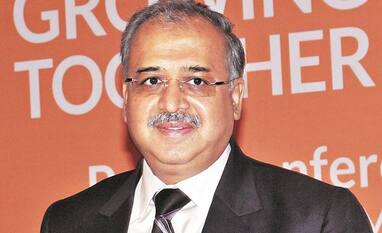
Dilip Shantilal Shanghvi is born on 1 October 1955 to Shantilal and Kumud Shanghvi. The family later moves to Calcutta, where his father runs a wholesale generic-drug distribution business in Burrabazar.
SignificanceThe pharmaceutical trade is the family occupation. His understanding of the industry begins in distribution, not in science.
1982
Graduates from the University of Calcutta
Takes a Bachelor of Commerce degree, having studied at J. J. Ajmera High School and Bhawanipur Education Society College, while assisting in his father’s business.
SignificanceA commercial rather than scientific training, which shapes a strategy built on markets, margins and distribution.
1983
Sun Pharmaceutical Industries founded
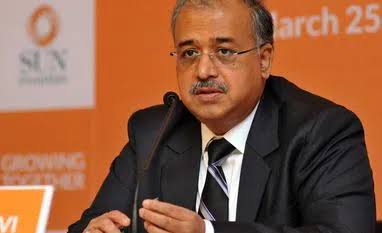
Started with a ₹10,000 loan from his father, five psychiatry products and a two-person marketing team. The first tablet and capsule facility is established at Vapi, Gujarat.
SignificanceEntry into a narrow therapy that larger competitors were not defending — the founding strategic choice.
1988
Entry into cardiology
Monotrate and Angize are launched, extending the company beyond psychiatry into a second specialist therapy with a chronic prescribing pattern.
SignificanceProof that the model was repeatable: depth in a specialism could be replicated therapy by therapy.
1991
First research centre established
Eight years after founding, the company sets up its first in-house research facility — early for an Indian company of its size at the time.
SignificanceThe beginning of the shift from formulating known products to developing differentiated ones.
1994
Initial public offering
Sun Pharma lists on the Indian stock exchanges. The issue is oversubscribed 55 times. The founding family retains majority ownership, which it holds to this day.
SignificancePublic capital financed the decade of acquisitions that turned a regional specialist into a national manufacturer.
1995–96
Backward integration into ingredients
An active-pharmaceutical-ingredient plant is commissioned at Panoli in 1995; a bulk-drug facility at Ahmednagar is acquired from Knoll Pharmaceuticals in 1996. The sales network reaches 24 countries.
SignificanceOwning the ingredient meant controlling cost, quality and supply — the precondition for selling into regulated markets.
1997
Caraco acquired — entry into the United States
Sun Pharma acquires Caraco Pharmaceutical Laboratories of Detroit, its first international acquisition, alongside equity stakes in Tamil Nadu Dadha Pharmaceuticals and MJ Pharma at home.
SignificanceEstablished the pattern of entering a market by acquiring an existing licensed operation rather than building one.
2007
SPARC demerged
Sun Pharma Advanced Research Company is separated as a listed entity working on new chemical entities and drug-delivery technologies. Dilip Shanghvi chairs it.
SignificanceInsulated long-horizon research from quarterly commercial pressure — an explicit structural choice about time.
2010
Controlling stake in Taro Pharmaceutical Industries
The acquisition of the Israeli dermatology company, contested by its founding family and settled over several years, brings plants in Israel and Canada and a substantial United States business.
SignificanceRoughly doubled the United States business and created the dermatology franchise that remains central to the company.
2012
DUSA and URL Pharma generics acquired
Two further United States transactions add dermatology device technology and additional generic capacity.
SignificanceConsolidated the American position ahead of the far larger transaction that followed two years later.
2014
Ranbaxy acquisition announced
On 6 April 2014 Sun Pharma announces an all-share acquisition of Ranbaxy Laboratories valued at approximately US$4 billion. The Competition Commission of India clears it in December, requiring the divestment of seven products. Tildrakizumab is licensed from Merck in the same year.
SignificanceThe largest transaction in the Indian pharmaceutical industry to that point, and a bet on a distressed asset of comparable size to the buyer.
2015
Ranbaxy merger completed
The merger closes on 25 March 2015. Ranbaxy is delisted and Daiichi Sankyo becomes a major Sun Pharma shareholder. In February of the same year, Shanghvi separately agrees to invest ₹1,800 crore for a 23 per cent stake in Suzlon Energy.
SignificanceCreated one of the world’s largest specialty generic companies and India’s largest pharmaceutical company by a clear margin.
2016
Padma Shri; Ocular Technologies; Japan
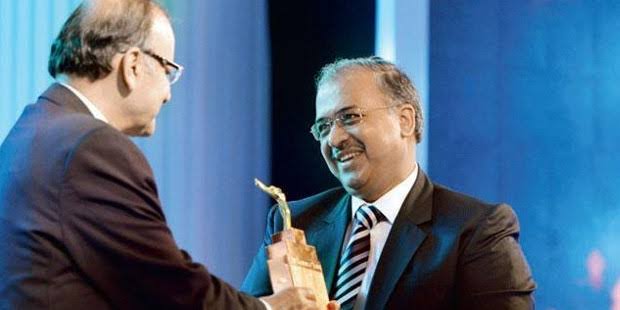
Dilip Shanghvi is awarded the Padma Shri by the Government of India for distinguished contribution to trade and industry. The company acquires Ocular Technologies and Biosintez, takes fourteen prescription brands from Novartis in Japan, and is appointed to chair the IIT Bombay Board of Governors.
SignificanceNational recognition coincides with the start of the deliberate pivot towards specialty medicine.
2018
ILUMYA launched; RBI appointment
Tildrakizumab, licensed from Merck in 2014, launches in the United States as ILUMYA for plaque psoriasis. In January the Government of India appoints Shanghvi to the twenty-one-member central board of the Reserve Bank of India.
SignificanceThe first major proof that the specialty strategy could produce a commercial product, not merely a pipeline.
2019
Pola Pharma, Greater China, CEQUA
The company acquires Pola Pharma in Japan, enters the Greater China market and launches CEQUA for dry eye disease in the United States. Tel Aviv University awards Shanghvi an honorary doctorate.
SignificanceGeographic and therapeutic widening in parallel — new markets and new specialty categories in the same year.
2023
Concert Pharmaceuticals acquired
Sun Pharma completes the acquisition of Concert Pharmaceuticals in a transaction valued at approximately US$576 million, bringing deuruxolitinib, later launched as LEQSELVI for severe alopecia areata.
SignificanceConfirmed the method of buying late-stage assets rather than extending internal discovery timelines.
2025
Checkpoint Therapeutics; leadership transition
Checkpoint Therapeutics is acquired for approximately US$355 million, adding UNLOXCYT in advanced cutaneous squamous cell carcinoma. Kirti Ganorkar is appointed Managing Director with effect from 1 September 2025; Shanghvi becomes Executive Chairman.
SignificanceOperating authority passes to a career executive after twenty-nine years in the company, while founder ownership and board leadership remain.
2026
Organon & Co. agreement announced
On 26 April 2026 Sun Pharma announces an agreement to acquire Organon & Co., the women’s health and biosimilars company spun out of Merck in 2021, for US$11.75 billion in cash. The transaction is expected to close in early 2027, subject to approvals. In August, Shanghvi is named IAA Business Leader of the Year.
SignificanceThe largest acquisition ever announced by an Indian pharmaceutical company; if completed it would take combined revenue to approximately US$12.4 billion.