Chapter 04 — Five chapters, forty years

Entrepreneurial
Journey

Sun Pharma was not built by a single decisive move. It was built by a sequence of choices about where to compete, what to own, when to buy and when to change — each one legible in the public record.

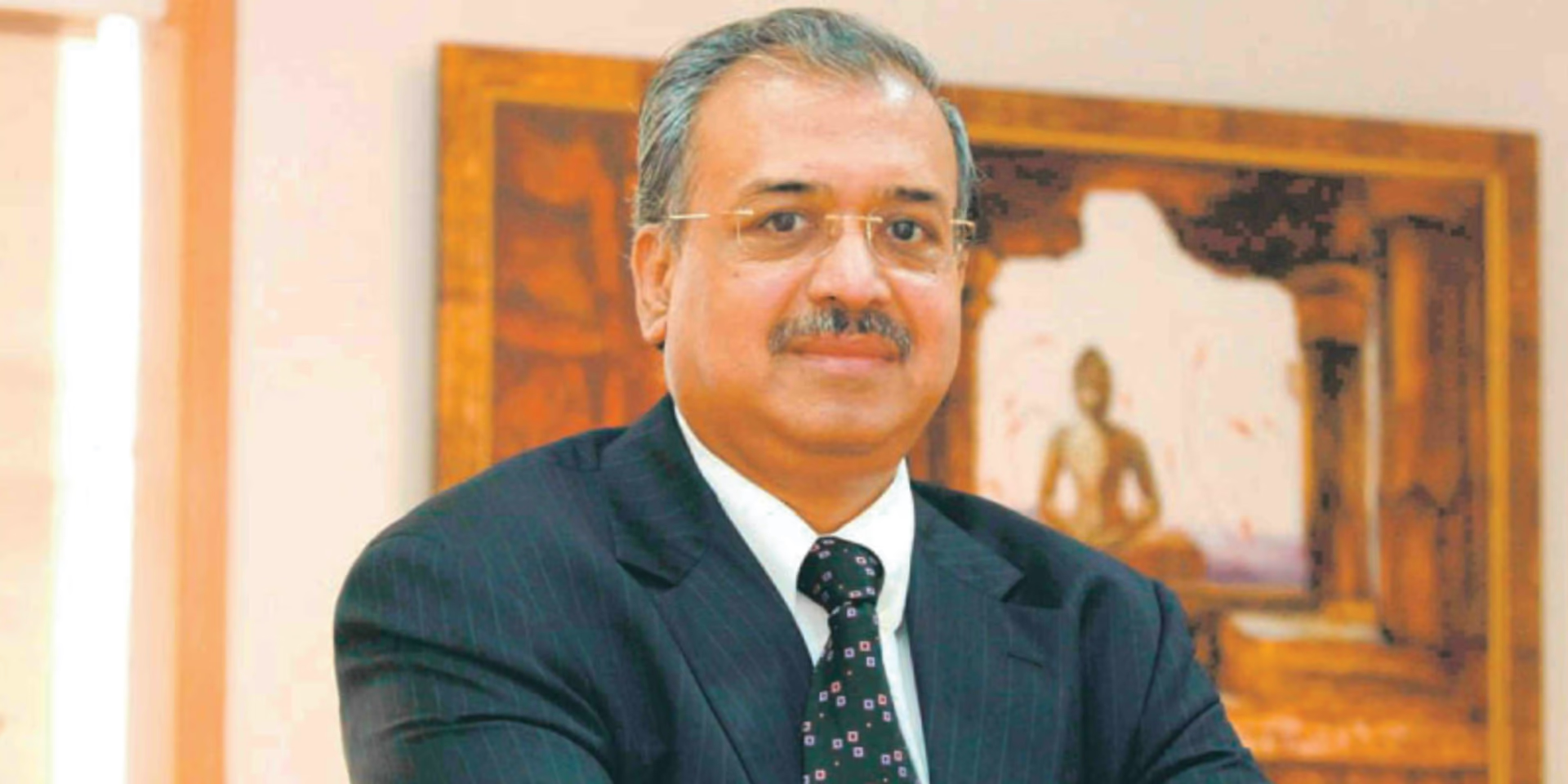
Dilip Shanghvi seated in a dark suit in his office, with a framed artwork behind him.
Shanghvi has run the company from Mumbai for most of its history, retaining majority family ownership since the 1994 listing.
Chapter I

Opportunity recognition

1983 – 1988

Every account of Sun Pharma begins with the same striking detail: a ₹10,000 loan, five products, two salespeople. The detail is accurate, but on its own it explains nothing. Thousands of small Indian pharmaceutical companies were founded on comparable terms in the same decade and did not survive. What distinguished this one was the choice of where to begin.

Shanghvi entered psychiatry. In early-1980s India that was a marginal therapeutic area: relatively few specialists, modest total prescription volume, and no interest from the large domestic companies whose sales forces were deployed against antibiotics, analgesics and vitamins. For a company with two salespeople, however, those characteristics were advantages rather than obstacles.

  • A reachable prescriber base. The number of practising psychiatrists in India was small enough that a two-person team could actually meet a meaningful proportion of them.
  • Chronic prescribing. Psychiatric medication is typically taken over long periods, producing repeat demand rather than one-off sales.
  • Weak incumbent attention. Larger competitors were not defending the segment, so early share could be won without a price war.
  • Brand durability. In a therapy where switching carries clinical risk, prescriber loyalty is unusually persistent.

By 1988 the model had been validated well enough to be repeated. Sun Pharma entered cardiology with Monotrate and Angize — again a specialist prescriber base, again chronic therapy, again defensible brands. The pattern that would govern the next thirty years was set: identify a therapy where depth beats breadth, take a defensible position, and then move to the next one.
Chapter II

Owning the supply chain

1988 – 1997

A formulation company that buys its active ingredients is, in effect, renting its cost base. Its margins move with its suppliers’ prices; its quality depends on their quality; its ability to supply depends on their reliability. For a company intending eventually to sell into regulated markets, that dependence is also a regulatory exposure.

Sun Pharma addressed this early. It commissioned its own active-pharmaceutical-ingredient plant at Panoli in 1995 and acquired an existing bulk-drug facility at Ahmednagar from Knoll Pharmaceuticals in 1996. In the same period it built research capability — a first research centre in 1991, a further facility in Mumbai in 1997 — and extended manufacturing with new formulation units at Silvassa in 1998, Dadra in 2001 and Jammu in 2004.

Capability acquired, 1995–2001

  • 1995 — Panoli active-pharmaceutical-ingredient plant commissioned.
  • 1996 — Bulk-drug plant at Ahmednagar acquired from Knoll Pharmaceuticals; sales network extended to 24 countries.
  • 1997 — Equity stakes in Tamil Nadu Dadha Pharmaceuticals and MJ Pharma; Mumbai research facility established.
  • 1999–2001 — Milmet Labs and a 7-ADCA manufacturing site acquired; Silvassa and Dadra formulation units in production.

This is the least visible phase of the company’s history and arguably the most consequential. Vertical integration is unglamorous and capital-hungry, and it produces no immediate revenue. It is also what made the next chapter possible: a company that controls its ingredients, its plants and its documentation can credibly present itself to a foreign regulator.

Chapter III

Choosing markets abroad

1997 – 2012

Sun Pharma’s international expansion followed a consistent logic: it entered markets by acquiring an existing licensed operation rather than by building one, and it preferred assets that were underperforming and therefore cheap.

The first was Caraco Pharmaceutical Laboratories of Detroit in 1997. Caraco was small, loss-making and difficult, and the relationship absorbed management attention for years. But it placed Sun Pharma inside the United States regulatory system with a manufacturing site, approvals and staff — a position that would have taken far longer to build from scratch.

The pattern repeated. In 2005 the company completed a manufacturing buyout at Bryan, Ohio and acquired ICN’s Hungarian business. Chattem Chemicals followed in 2008. Then, in 2010, came the transaction that changed the scale of the American business: a controlling stake in Taro Pharmaceutical Industries, an Israeli dermatology specialist with plants in Israel and Canada. The acquisition was contested by Taro’s founding family and took years to settle, but it roughly doubled Sun Pharma’s United States revenue and gave it a dermatology franchise it did not previously have. DUSA Pharmaceuticals and the generics business of URL Pharma were added in 2012.

I will never risk capital, but I will risk profit. Dilip Shanghvi, interviewed by Gautam Kumra, McKinsey & Company

The distinction in that statement explains a good deal about how these transactions were financed. Sun Pharma has historically carried low debt and funded acquisitions from internal accruals and equity. A contested, multi-year acquisition such as Taro consumed profit and management time; it did not put the balance sheet at risk.

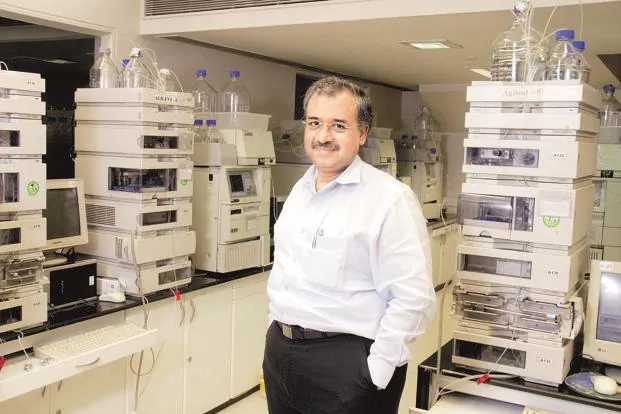
Dilip Shanghvi standing in a laboratory surrounded by analytical chromatography instruments.
Analytical capability is the precondition for selling into regulated markets: a manufacturer must be able to prove what it has made, not merely make it.
Chapter IV

Scale, and its consequences

2014 – 2018

On 6 April 2014 Sun Pharma announced the acquisition of Ranbaxy Laboratories in an all-share transaction valued at approximately US$4 billion. It was an unusual deal in several respects. Ranbaxy was the more famous company — for a generation it had been the public face of Indian pharmaceuticals abroad — but it was in serious regulatory trouble in the United States, with multiple sites under import alert. Sun Pharma was buying a distressed asset of a size comparable to its own.

The Competition Commission of India approved the merger in December 2014, requiring the divestment of seven products to preserve competition. The transaction completed on 25 March 2015. Ranbaxy was delisted; Daiichi Sankyo, its Japanese owner, became a major Sun Pharma shareholder. The combined business became one of the world’s largest specialty generic companies and India’s largest pharmaceutical company by a clear margin.

What followed was harder than the deal. The company had to remediate inherited manufacturing sites, rationalise overlapping product portfolios and merge two organisations with markedly different operating cultures. And it had to do all of that while the economics of its principal export market deteriorated.

The United States generic price correction

From around 2015, consolidation among American drug purchasers into a small number of buying consortia produced sustained price deflation in generic medicines. Shanghvi has described Sun Pharma losing close to a billion dollars of revenue to this compression with no reduction in volume — a structural change in the market rather than a loss of competitive position, and one that could not be answered by selling more of the same products.

The episode is instructive because it shows the limits of the strategy that had worked until then. Depth in a therapy protects against competitors; it does not protect against a change in who does the buying. The response had to be a change in what the company sold.

Chapter V

Adaptation: from volume to value

2014 – 2026

Sun Pharma’s answer to generic price deflation was to move up the value chain into differentiated and innovative medicines — products protected by patents, clinical data and specialist prescribing rather than by cost. Crucially, it did so mostly by licensing and acquiring assets already close to market, rather than by lengthening its own discovery timelines.

Selected specialty and innovative additions
YearAssetOutcome
2014Tildrakizumab licensed from MerckLaunched as ILUMYA for plaque psoriasis in the United States in 2018; Japan 2020; Canada 2021.
2015InSite Vision acquiredOphthalmic technology; BromSite launched in the United States in 2016.
2016Ocular Technologies acquiredBrought the dry-eye treatment later marketed in the United States as CEQUA.
201614 prescription brands from Novartis, JapanEstablished a Japanese prescription presence; Pola Pharma followed in 2019.
2021WINLEVI launched, United StatesA novel topical treatment for acne, extending the dermatology franchise.
2023Concert Pharmaceuticals acquiredDeuruxolitinib, launched as LEQSELVI for severe alopecia areata.
2025Checkpoint Therapeutics acquiredUNLOXCYT in advanced cutaneous squamous cell carcinoma.
2026Agreement to acquire Organon & Co.US$11.75 billion all-cash transaction announced 26 April 2026; expected to close in early 2027.

By the financial year ended March 2026 the strategy had produced a measurable shift: global innovative-medicines revenue of US$1.42 billion, equal to 20.7 per cent of company sales, with the United States innovative business passing one billion dollars. The Organon transaction, if completed, would take Sun Pharma’s revenue to roughly US$12.4 billion and place it among the twenty-five largest pharmaceutical companies in the world.

Sources: Sun Pharma milestones and FY2026 results; Sun Pharma and Organon & Co. announcement, 26 April 2026.

Reading the pattern

Five consistencies across four decades

i Enter where competition is weakest, not where the market is largest. Psychiatry in 1983; dermatology through Taro; ophthalmology through InSite and Ocular.
ii Buy capability rather than turnover. Almost every acquisition brought plants, approvals, molecules or prescriber access that would have taken years to build.
iii Integrate backwards. Owning ingredients and manufacturing protects both cost and regulatory standing.
iv Keep the balance sheet conservative. Low leverage has allowed the company to absorb contested deals and market shocks without distress.
v Change the product when the market changes. The specialty pivot after 2014 was a response to structural deflation, not an aspiration.
vi Prefer assets close to market. Licensing late-stage molecules shortens the distance between capital committed and revenue earned.
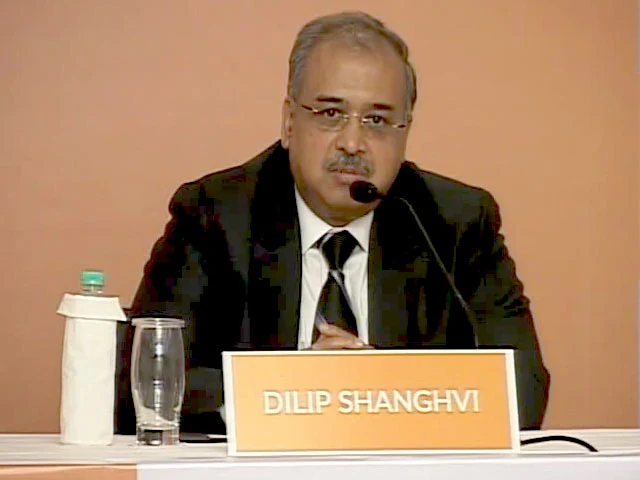
Dilip Shanghvi speaking at a press briefing with a nameplate reading Dilip Shanghvi in front of him.
Addressing a company briefing. Sun Pharma has been listed on the Indian exchanges since 1994.

Continue

The institution itself

The journey described here produced a specific institution: 41 manufacturing sites, more than 43,000 employees, medicines in over a hundred countries and a research organisation of nearly three thousand people. The Sun Pharma page sets out that institution in detail.